Greeting
Welcome Message
We sometimes encounter a simple yet profound q uestion: "What will the future become?"
Unprecedented population ageing, accelerating climate change, rapid digitalisation, and the ongoing evolution of artificial intelligence - we are living through a period of profound and complex transformation. These so-called "megatrends" can at times feel overwhelming, as though they extend beyond the influence of any single individual.
But that does not mean we are powerless. Humanity has never existed in isolation; even with limited resources, we have connected with one another, cultivated culture, and adapted through creativity and collective effort, seeking not only survival but richer and more meaningful ways of living.
Social prescribing represents one such effort to harness the power of connection. By linking healthcare, welfare, and community activities, it aims to build societies in which no one is left behind. In recent years, social prescribing has expanded across diverse settings, supported by increasing policy engagement and a growing body of evidence.
Particularly noteworthy are initiatives that draw upon relationships with arts, culture, and nature. Cultural participation and experiences grounded in coexistence with the natural world may serve as vital resources for supporting human wellbeing.
This conference takes place in Kyoto, Japan - a city with over 1,200 years of history, shaped by resilience through repeated crises, including earthquakes, conflicts, floods, and epidemics. A relational worldview, often associated with animistic traditions and long-standing coexistence with nature, may offer distinctive perspectives for social prescribing practices that engage culture and the natural environment.
We refer to social prescribing through arts and culture as "cultural prescribing," and continue to explore its potential. Across the world, diverse approaches rooted in local cultures and values are emerging. We hope this conference will provide a space to share these experiences and to collectively envision how social prescribing may evolve in ways that honour cultural diversity.
In uncertain times, we hope that the q uestion "What will the future become?" may gradually give way to a sense of possibility—that perhaps the future is something we can shape together.
I very much look forward to welcoming you to Kyoto.
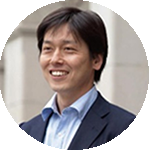
Naoki Kondo, MD, PhD
Conference Chair, ISPC 2026
Professor and Chair, Department of Social Epidemiology,
Graduate School of Medicine, Kyoto University
Director, Social Common Capital Research Institute, Kyoto University
Director, An-nei(Wellbeing) Community Co-Creation Initiative (AnCo)